Emotional Intelligence (EQ) has become a trending buzzword in the corporate world, gaining importance alongside the advancements in the AI realm, often referred to as the virtual IQ world. It is widely acknowledged that EQ surpasses Intelligence Quotient (IQ) in the long run, impacting both professional and personal lives significantly. Let’s delve into this article to understand the importance of emotional intelligence.
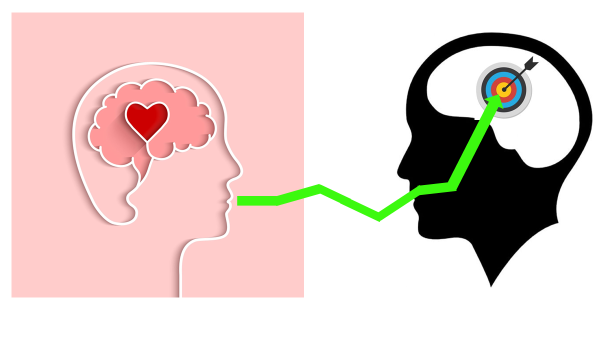
What is Intelligence Quotient (IQ)?
IQ stands for Intelligence Quotient, measuring an individual’s intellectual abilities and smartness. IQ tests assess cognitive skills such as logical reasoning, problem-solving, mathematical proficiency, language comprehension, and spatial awareness. These tests provide a numerical score representing a person’s intelligence in comparison to the general population.
What is Emotional Intelligence (EQ)?
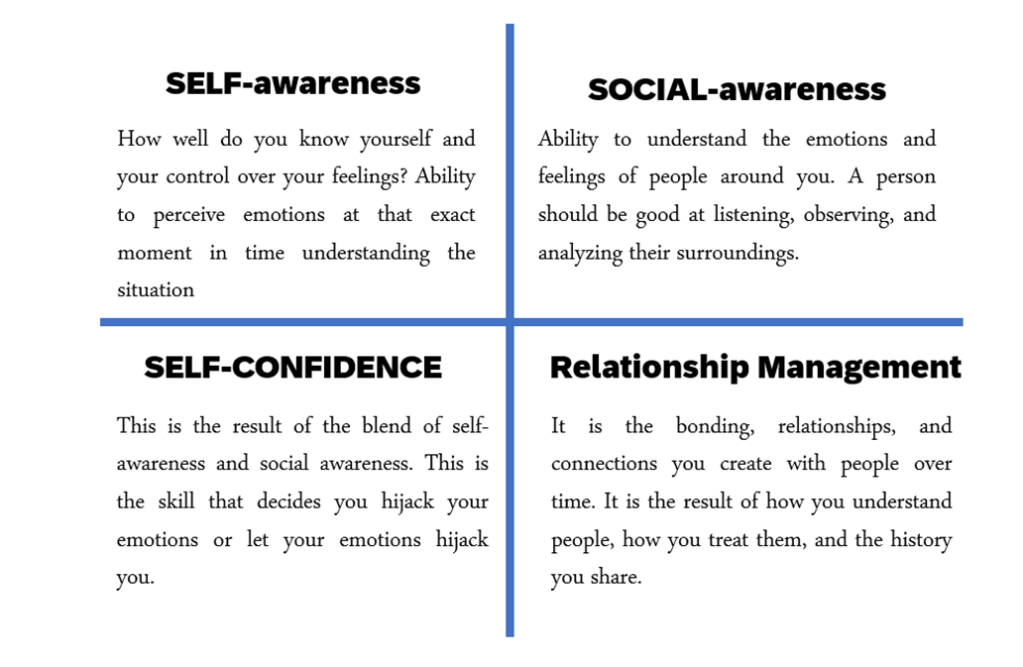
Emotional Intelligence as the name suggests, is the ability to recognize, control, manage, and influence one’s own emotions and those of people around them. It comprises critical skills like empathy, self-awareness, social awareness, self-confidence, and relationship management. Individuals proficient in these skills tend to be more successful in their careers, even if their IQ is comparatively low.
THE JOBS OF EMOTIONAL INTELLIGENCE
It is often said that “A Businessman who understands their customer needs understands the Business”. Emotional Intelligence is a part of our daily life. It is necessary for our personal, professional, academic, social, and love life. But there are few jobs whose success is solely based on emotional intelligence. To name a few, HR Managers, Sales, Negotiations, Politicians, Film Directors, Mediators, Doctors, Customer relationship managers, and many more. Let us understand a few of them in detail.
Sales: If you are able to connect your product with the needs of your customer or are able to create the need for the product in the customers mind, then you are most likely to be able to successfully sell a product. Emotional intelligence in sales is necessary to build rapport, communicate effectively, understand customer needs, handle rejections, negotiate, manage stress, and adapt to changing situations. It plays a pivotal role in building relationships and closing deals successfully. Also the fact is ”Every businessman should be a good salesman”.
Negotiation: Emotional intelligence in negotiation involves understanding and managing emotions, empathizing with the other party, active listening, staying composed under pressure, excelling in social interactions, being self-aware, adapting to changes, and finding win-win solutions. These skills are essential for effective communication, building trust, and reaching agreements that satisfy all parties involved. The importance of EQ in negotiation has been described exceptionally well by one of the famous authors Chriss Voss in his book ‘Never Split the Difference: Negotiating as if your life depended on it’.
Politics: This might sound strange, but yes politics is the game of emotional intelligence. Imagine if a leader or politician only shows you the different numbers of finance, literacy rate, GDP or development or talks only about problems which connects to the minority population of the country. Will you vote for them? Maximum chances are no. Here is when they show their emotional intelligence and try to connect with people at the time of campaigning for elections. They have to use their EQ to connect with maximum number of people from all classes and background. Every voter is required to be made feel that you are the right candidate for his country/state/district. While facts and figures are essential to showcase competence, emotional intelligence (EQ) helps politicians relate to the concerns, hopes, and aspirations of the people they aim to represent.

why EQ beats iq?
Various books and research studies state that your IQ accounts for only 20% of your life, while your EQ comprises the remaining 80%. Even if someone excels in their field but lacks emotional intelligence, their success remains limited. EQ is so critical that to success that it accounts for 60 % of the performance in all types of jobs.
Let’s assume you are a brilliant product designer. You can design, solve, and build any type of product. But you are not able to present or sell your product. You are not able to connect with your customers and not being able to justify how the product is the right fit for their needs. Are you successful? of course not. You have achieved success to some extent but failed to a greater extent.
Similarly, we humans ourselves are a product. It’s not always about how much we know but mostly about how we showcase, represent, and sell ourselves, and this is where EQ plays an important role. Intellectual intelligence (IQ) can certainly contribute to individual success, and to some extent, team success. However, emotional intelligence (EQ) often plays a crucial role in ensuring success on both personal and collective levels in most situations. EQ not only helps individuals navigate their own emotions and interactions effectively but also enables them to understand and connect with others on a deeper level. This heightened understanding of emotions, both one’s own and others’, fosters better teamwork, communication, and overall interpersonal relationships, which are fundamental for achieving success in various aspects of life. Therefore, while IQ may provide a strong foundation, it is EQ that frequently guarantees success in both individual and team contexts.
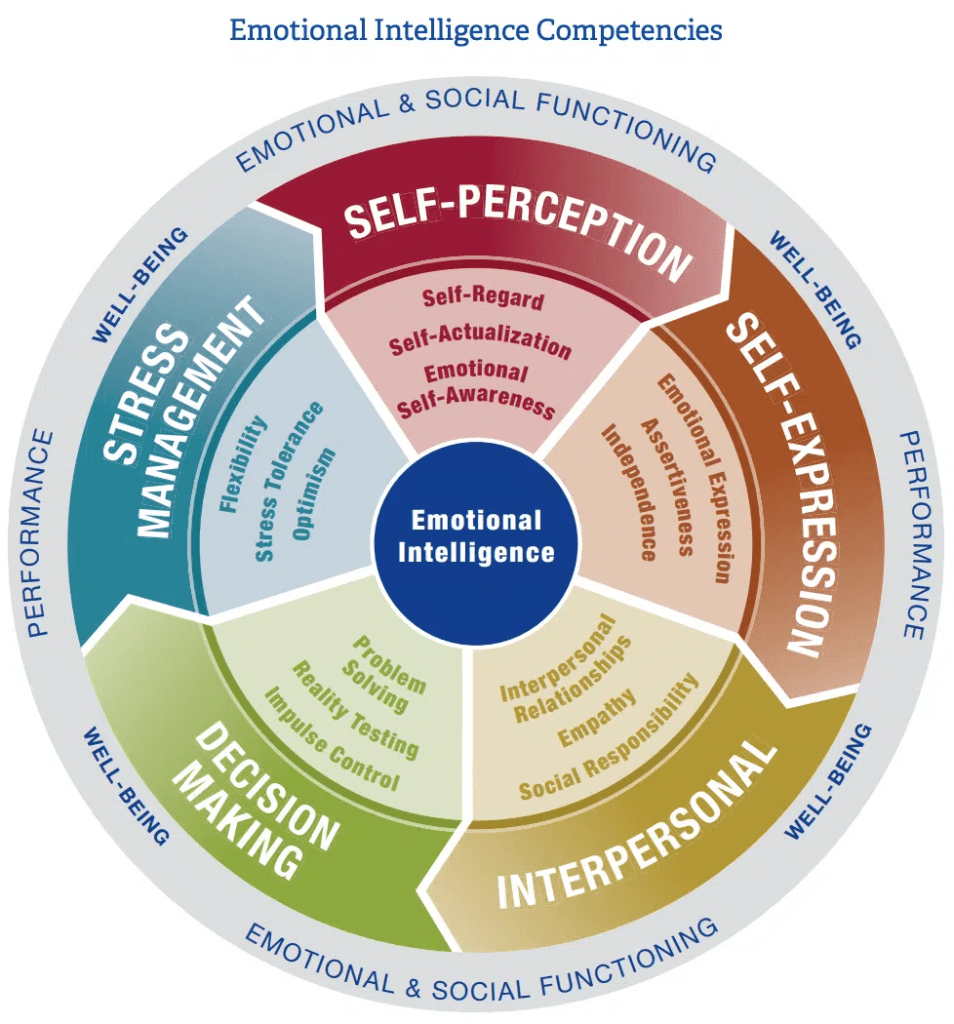
Therefore in this transitioning world of higher virtual IQ like Artificial Intelligence, Machine Learning and much more, EQ will be the key to survive this world. Robots may replace humans in every aspect of work with higher IQ, but it will be only humans who will have the Emotional Intelligence and therefore we humans will have to master this skill. Consequently, in the long-term perspective, EQ is poised to surpass IQ in importance, playing a central role in the future of humanity.
“Emotional Intelligence may not seem a difficult skill but it is the art of choosing right emotions and right words at the right time.“
– Vedant Kale
 VEDANT INSIGHTS
Awesome Write up..Keep it up..
LikeLiked by 1 person
Thank you!!
LikeLike