India, a country with a population of 1.4 billion and growing annually at a rate of 0.9%, faces its own set of challenges. Like every developing country, it grapples with issues such as population growth, education, infrastructure, politics, corruption, and healthcare. However, as the world enters an era shaped by the rapid advancement of Artificial Intelligence (AI), the question arises: Can India navigate its hurdles and harness the power of AI to its advantage? The potential for AI to transform industries and economies could be a game changer, but the path to leveraging this opportunity is filled with both promise and complexity.

The Education System, Skill Gap, and Unemployment
With a median age of 28, India has the youngest population globally—a demographic advantage, but only on paper. But how many of these young individuals are truly employable?
India’s education system struggles to match industry standards. Outdated curricula, paired with limited awareness of emerging trends among educators, create a gap that traditional teaching methods fail to bridge. The heavy focus on rote learning stifles critical thinking and fails to equip students with practical skills, leaving them ill-prepared for modern careers and the job market. In today’s world, where AI tools like ChatGPT and Gemini are transforming learning and work, the relevance of traditional assignments and exams is questionable. This outdated approach exacerbates the growing skill gap and contributes to rising unemployment rates.

Dependence on Foreign Technology
India’s reliance on foreign technology, especially from U.S.-based companies, exposes a significant vulnerability. India has the largest number of WhatsApp and Instagram users in the world. Imagine if services like WhatsApp and Google were to stop functioning in India for a few days—work, businesses, social networks, and personal connections would face an abrupt halt throughout the country. This dependence underscores India’s lack of technological self-sufficiency and innovation, hindering its ability to lead on the global stage.
However, India is making strides with homegrown alternatives. Companies like OYO have revolutionized hospitality, Zomato has become a global name in food delivery, and Jio has transformed the telecom sector with affordable internet access. These companies demonstrate India’s potential for innovation, though more is needed to match China’s technological self-reliance.
A common question posed in Indian discussions is: Can India surpass China as a global superpower? While India enjoys advantages like a young workforce and a democratic system, it lacks the homegrown technological and industrial ecosystems that China has built over decades.
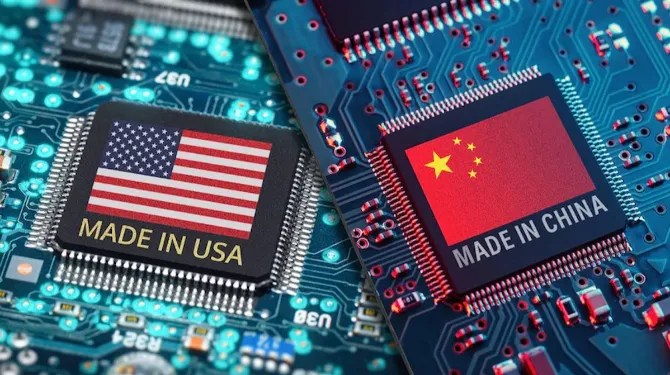
For every major U.S. tech product, China has developed its own alternative. If the USA has WhatsApp, China has WeChat. If the USA has Google, China has Baidu. If the USA has Instagram, China has Xiaohongshu and TikTok. If the USA has the iPhone, China has Huawei. This contrast highlights China’s emphasis on self-reliance, innovation, and its growth as a global manufacturing powerhouse.
Lack of Infrastructure
India is still striving to meet the basic demands of its citizens, including reliable access to roads, water, and electricity. The lack of robust infrastructure and the burden of high taxes in India is a significant factor driving the ‘brain drain’, where highly educated individuals seek better opportunities abroad. Inadequate research facilities, limited career advancement prospects, and insufficient support for innovation often push skilled professionals to countries with more developed systems. This exodus results in a loss of talent in critical sectors such as technology, healthcare, and education, which in turn slows India’s overall development. Without addressing these infrastructure gaps, such as improving career pathways, research funding, and overall living conditions, retaining highly skilled individuals within the country becomes increasingly challenging.
Massive Job Displacement
While AI may not fully replace humans, its rapid advancement will likely reduce the need for workers in many industries over the next decade or two. As automation grows, both blue- and white-collar jobs will be affected, raising concerns for developing countries like India, where unemployment is already high. The critical question remains: what will happen to workers displaced by automation?

Opportunities and Challenges
India faces several challenges in leveraging AI’s potential, including the digital divide, language barriers, slow political decision-making, and a lack of a clear regulatory framework. The high cost of AI adoption, particularly for small businesses, and ethical concerns related to privacy and data security also pose significant hurdles. Overcoming these challenges requires targeted policies, infrastructure development, and a robust legal framework to ensure inclusive, responsible AI deployment and to enable India to fully capitalize on AI’s benefits.
At the same time, India can leverage its large population as a hub for creativity and innovation, tapping into a vast pool of talent and ideas to drive progress. AI offers India a transformative opportunity to accelerate economic growth, enhance global competitiveness, and solve complex challenges efficiently. By embracing AI, India can unlock new avenues for innovation, improve public services, reduce inefficiencies, and create jobs. It can help India overcome traditional barriers, drive inclusive development, and solidify its role in the global digital economy. In essence, AI provides India with the tools to modernize industries, improve quality of life, and strengthen its position as a technology leader.
Conclusion
The next few years are crucial for India. The country stands at a pivotal crossroads, where its decisions and actions will determine whether it leads the global race in technology and innovation or multiplies its existing challenges. To compete, India must shift its focus toward fostering innovation, creating world-class products, and building technological independence. Only then can it leverage its demographic strength and emerging AI opportunities to establish itself as a global leader.
“India should walk on her own shadow – we must have our own development model”
– A. P. J. Abdul Kalam
 VEDANT INSIGHTS