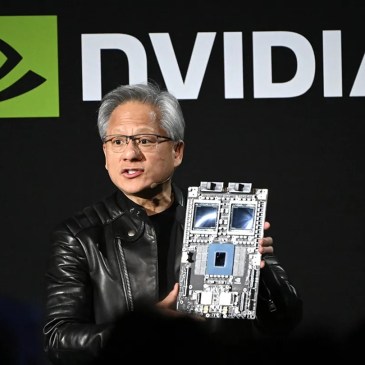
NVIDIA: The Merchant’s AI Gold Mine
October 20, 2026
NVIDIA sells the picks and shovels of the AI boom. Increasingly, it owns stakes in the gold mines too. … More NVIDIA: The Merchant’s AI Gold Mine
NVIDIA sells the picks and shovels of the AI boom. Increasingly, it owns stakes in the gold mines too. … More NVIDIA: The Merchant’s AI Gold Mine

India’s traditional Dahi Handi festival offers a useful framework for understanding today’s AI economy. In the festival, a human pyramid relies on a broad, stable foundation to support a single climber at the top. Today, that balance is shifting. While infrastructure providers continue to benefit from sustained investment, AI software companies face growing pressure to … More The AI Economy: A Structural Rebalancing

Copper is the metal that runs through every chapter of human civilization. From the first tools and weapons to modern AI infrastructure, it has been the driving force of human progress. And today, as the world races to electrify everything from cars to factories to entire cities, demand for copper is surging at a pace … More Copper Wired the World. Glass Will Run It.

Apple Inc. recently marked its 50th anniversary, celebrating half a century of meticulous design, supply chain excellence, and relentless innovation that transformed entire industries. What began in a garage has since evolved into the world’s second most valuable company, with a market capitalization of approximately $3.77 trillion. Apple did not just build products. It engineered … More 50 Years of Apple: The Excellence Blueprint

For more than a century, the structure of industries has been shaped by two strategic forces: vertical integration and horizontal integration. Both strategies pursued the same objective: control over supply chains, competitors, and markets. From oil companies controlling refineries and distribution networks to tech giants acquiring competitors and locking in markets, the strategy was always … More AI: The Next Chapter in Vertical and Horizontal Integration

Geopolitics is shaping the operating rules of the business world faster than ever. With more than 50 active conflicts worldwide, political risk is directly influencing economic outcomes and supply-chain design. Business strategy is no longer centered on forecasting supply and demand. Risk management has moved to the core of decision-making, pushing companies away from long-term … More The Geopolitical Recession: Why Business Is Moving From Just-In-Time to Just-In-Case
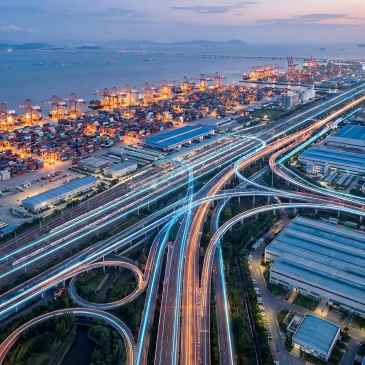
China, the world’s second-largest economy at nearly $20 trillion, has transformed itself in less than five decades from a developing nation into the world’s manufacturing hub. Once known primarily for its vast population and low production costs, China today sits at the center of the world’s supply chains. The real question, however, is this: how … More How China Built the World’s Most Integrated Supply Chain

Capitalism has always come at a cost. While profits and innovation fueled growth, the cost was often borne by the environment, society, and human lives, alongside political compromises and shifting geopolitical landscapes. Today, these costs are no longer abstract; they directly threaten markets, supply chains, and long-term profitability. In this era, capitalism cannot thrive without … More Why Capitalism Needs Sustainability More Than Ever

In the era of AI, where technology is advancing faster than ever through smarter algorithms, autonomous systems, and powerful tools, it’s easy to assume machines will soon outthink us. But AI is set to replace commonality, not originality. To stay relevant, we must think deeper, be creative, stay inventive, and always find a new angle … More Mental Models: The Human Edge in the Era of AI
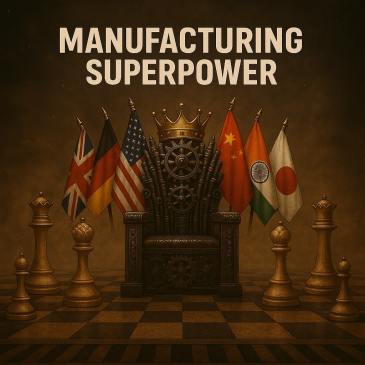
Manufacturing has long been the backbone of developing economies and the strategic strength of developed ones. It transforms nations — not just economically, but geopolitically. For developing economies, manufacturing creates jobs, builds infrastructure, and lifts millions out of poverty. For developed nations, it fuels innovation, secures self-reliance, and sustains global dominance. History shows that countries … More Why Nations That Manufacture Become Superpowers

India, a country with a population of 1.4 billion and growing annually at a rate of 0.9%, faces its own set of challenges. Like every developing country, it grapples with issues such as population growth, education, infrastructure, politics, corruption, and healthcare. However, as the world enters an era shaped by the rapid advancement of Artificial … More India’s AI Future: Navigating Opportunities Through Challenges

Semiconductor chips have emerged as indispensable components of the global economy, underpinning the digital revolution and serving as the cornerstone for the advancement of AI technology. With recent advancements in AI and IoT, the demand for semiconductors has skyrocketed creating national interest and fundamental manufacturing need worth trillions of dollars. Let’s delve into this article … More Semiconductor Chips – The Oil & Pillar for the AI Revolution

