Copper is the metal that runs through every chapter of human civilization. From the first tools and weapons to modern AI infrastructure, it has been the driving force of human progress. And today, as the world races to electrify everything from cars to factories to entire cities, demand for copper is surging at a pace that mines simply cannot keep up with.
Yet inside the world’s most powerful AI data centers, a different material is quietly taking over. Glass. Thin strands spun into cables, no wider than a human hair, carry information at nearly the speed of light. The infrastructure decisions being made right now by the world’s largest technology companies suggest that when it comes to moving data, glass has already won.
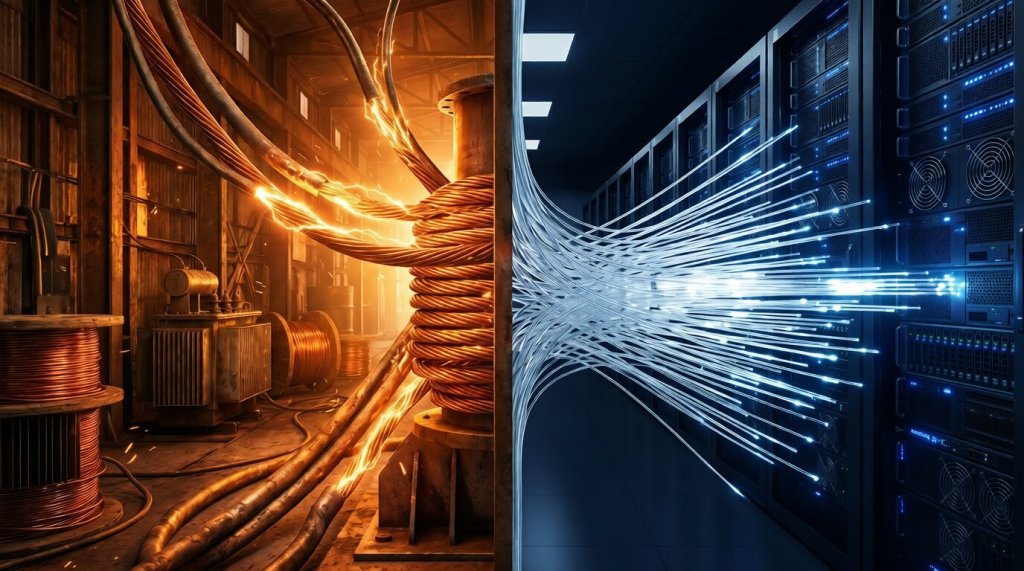
The Importance of Copper
Copper has been the backbone of industrial civilization for more than a century. Today it sits at the center of nearly every major technological transition underway simultaneously.
Electric vehicles use 2.5 to 4 times more copper than a conventional car. A single offshore wind turbine requires up to 9 tonnes of it. Solar farms, battery storage systems, EV charging networks, 5G towers, and smart power grids all depend on copper in enormous quantities. Goldman Sachs has called copper “the new oil,” not as a metaphor, but as a reflection of strategic importance.
It is the second best electrical conductor on earth after silver, far cheaper at commercial scale, highly malleable, naturally resistant to corrosion, and infinitely recyclable without losing quality. It carries both data and power simultaneously. It powers everything from motors and transformers to servers, grids, and semiconductor infrastructure.
China plays a unique double role in the global copper market that no other country matches. It is the fourth largest copper mining nation in the world, yet still imports 60% of the world’s copper ore because its own mines cannot satisfy its enormous domestic demand. It mines, imports, and refines over 45% of the world’s copper, then exports finished products globally. It does not just participate in the copper market. It effectively runs it.
As of May 2026, copper is trading at approximately $6.60 to $6.69 per pound, roughly 43% higher than a year ago. Supply cannot keep pace with what the energy transition demands.
Glass: The Core of Fiber Optics
Fiber optic cables are made of ultra thin strands of glass that transmit pulses of light instead of electrical signals. Optical signals experience far lower attenuation over distance than copper, and are immune to electromagnetic interference. The result is a medium that is faster, more reliable, and more durable than anything copper can offer.
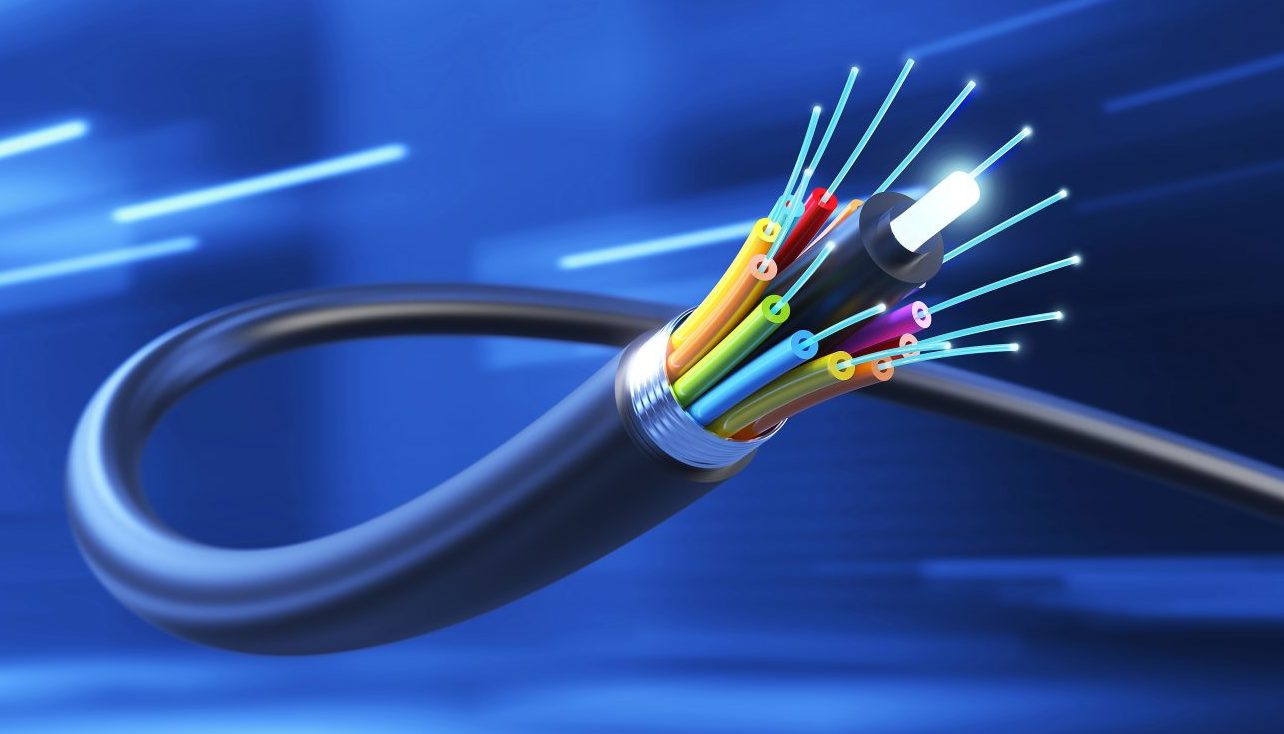
That combination has made fiber optics the foundation of the modern internet.
The latest breakthrough takes this further. Hollow core fiber is a new design where light travels through air inside the glass strand rather than through solid glass. It moves data 45% faster than standard fiber, with dramatically lower signal loss.
Microsoft acquired Lumenisity, a hollow core fiber spinout from the University of Southampton, and partnered with Corning to manufacture it at scale. The future of fiber is not just glass. It is glass with air inside it.
Copper Vs Glass (Fiber)
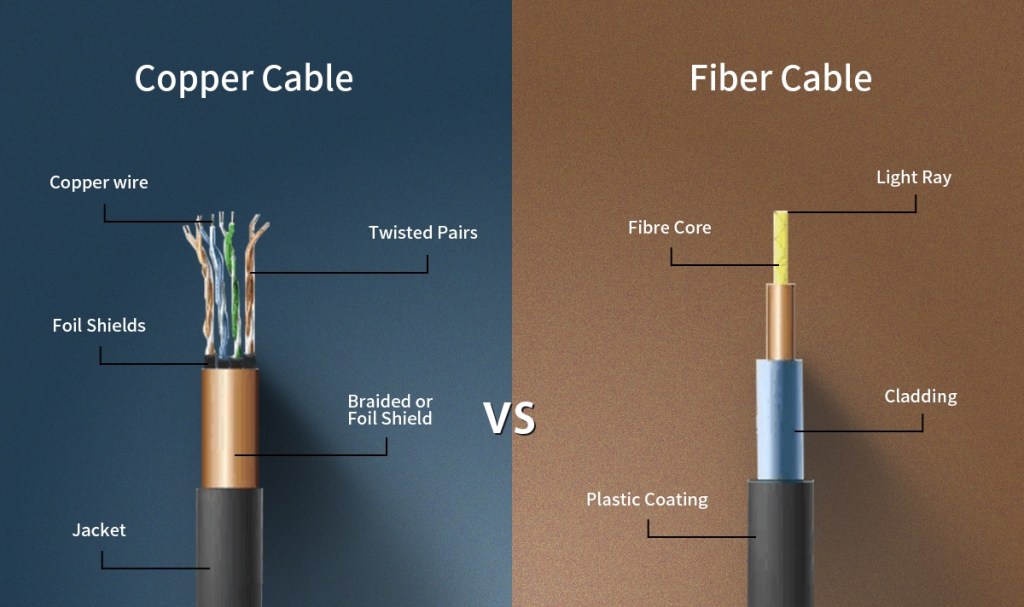
| Feature | Copper | Glass (Fiber) |
| Speed | Up to 10 Gbps | Hundreds of Tbps |
| Effective Range | ~330 feet (Boosters required) | ~25 miles (No boosters) |
| Power Delivery | Yes | No |
| Interference | Vulnerable (EMI) | Immune |
| Security | Vulnerable to signal tapping | High (Difficult to intercept) |
| Lifespan | 5–15 Years | Up to 50 Years |
| Weight | Heavy & Rigid | Lightweight & Flexible |
Why Glass Couldn’t Replace Copper Before, and Why AI Changed Everything
For decades, copper was not just sufficient. It was the foundation of the internet itself.
The internet of the 1990s and early 2000s ran on modest data demands. Emails, basic web pages, and early streaming worked fine on copper telephone infrastructure already deployed across cities, offices, and homes worldwide. Replacing that network made no economic sense.
Fiber optic technology existed, but large-scale deployment was expensive and operationally difficult. Installation and splicing required specialized equipment, skilled technicians, and significant capital investment, especially in the costly “last mile” connection to homes and businesses.
Three major shifts changed the equation.
5G: Today, 90% of the journey your data takes on a 5G network runs through glass underground. Only the final hop to your device is wireless. Fiber had quietly become the backbone of modern wireless infrastructure.
AI Workloads: Modern AI systems move enormous volumes of data between thousands of chips simultaneously. Fiber handles that traffic with lower heat generation and lower power loss than copper, reducing cooling costs at hyperscale.
Hyperscale data centers: A single modern AI rack can contain thousands of copper interconnects. Replacing portions of those systems with optical connectivity reduces heat, lowers power consumption, and removes critical bandwidth bottlenecks. Telecom companies publicly stated fiber costs 35% less to maintain than copper.
And the story is not over. 6G, expected around 2030, will demand even denser fiber networks. Standards bodies increasingly view optical fiber as essential for meeting 6G’s bandwidth and latency requirements.
The Companies Betting on the Glass Revolution

Corning has been one of the defining companies in the optical fiber industry for decades. The company pioneered low-loss optical fiber in 1970 and is now emerging as a major beneficiary of the AI infrastructure boom. Nvidia has invested in Corning’s optical technology expansion, including support for new advanced manufacturing facilities in the United States. Meta has also committed billions toward long-term optical infrastructure capacity, including Corning’s cable manufacturing operations in Hickory, North Carolina.
Nvidia is not just backing manufacturers. It is reshaping the entire optical supply chain. The company has invested $4 billion in Coherent and Lumentum, firms that develop lasers and components converting data between light and electrical signals. Nvidia and AMD have jointly backed Ayar Labs, a co-packaged optics startup that has raised $500 million and is valued at $3.75 billion. Ayar Labs replaces copper interconnects between chips with optical connectivity, enabling thousands of GPUs to operate as a unified system.
AT&T is replacing its entire legacy copper network with fiber at the consumer level. As of 2025, it offers symmetrical speeds of up to 5 Gbps on fiber and has committed to expanding availability to millions of new locations.
Sterlite Technologies, known as STL, is India’s largest fiber manufacturer, now accelerating its push into the American market. In May 2026, STL announced a $100 million investment in the United States to expand its optical fiber and data center infrastructure. Owning the entire value chain from glass to data center connectivity, STL is positioning itself as a key supplier for the AI era.
Conclusion
Demand for optical fiber is growing so rapidly that manufacturers are racing to expand capacity worldwide. But the glass economy carries its own strategic vulnerabilities.
Geopolitically, fiber optic manufacturing depends heavily on germanium, around 80% of which has historically been sourced from China. China has begun restricting germanium exports, creating a supply chain vulnerability for Western fiber manufacturers. Countries and companies that secure alternative germanium sources or develop germanium-efficient manufacturing processes will hold a significant strategic advantage in the glass economy.
Copper will remain irreplaceable for decades. But when it comes to moving data at the speed of AI, glass has already won.
The question for business leaders is not whether glass will define AI infrastructure. The question is who controls the supply chain, who owns the manufacturing capacity, and who builds the standards that the next decade runs on.
“Copper wired the nervous system of the modern world. Glass fiber is rewiring it for a world that thinks at the speed of light.”
– Vedant Kale
Vedant Kale is a Polymath Strategist, writer, and founder of Vedant Insights. He writes at the intersection of geopolitics, economics, and technology.
LinkedIn | csuitemodels.com | straticker.com | Subscribe to Vedant Insights
 VEDANT INSIGHTS