Apple Inc. recently marked its 50th anniversary, celebrating half a century of meticulous design, supply chain excellence, and relentless innovation that transformed entire industries. What began in a garage has since evolved into the world’s second most valuable company, with a market capitalization of approximately $3.77 trillion. Apple did not just build products. It engineered one of the most powerful business models in the world.
Innovation met Execution
Apple Inc. was founded on April 1, 1976, by Steve Jobs, Steve Wozniak, and Ronald Wayne. Beginning with the Apple I, the company spent decades navigating challenges, reinvention, and defining moments.
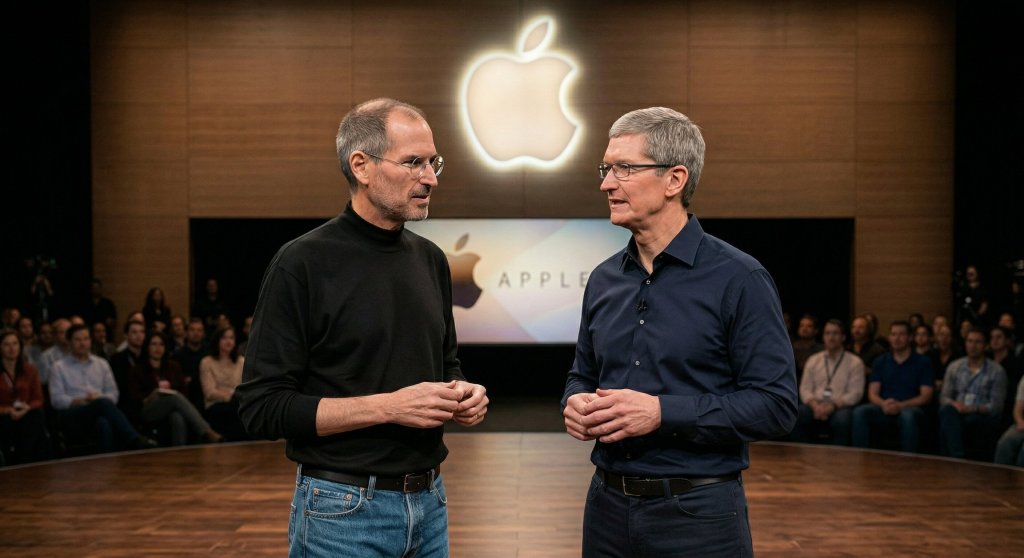
Steve Jobs rescued Apple from near bankruptcy and went on to create its most iconic products, including the iPhone, iPad, and Mac. Tim Cook, who became CEO in 2011, oversaw an expansion of the company’s valuation from roughly $350 billion to over $3.5 trillion by 2026. Hired in 1998 to lead operations, Cook also made Apple one of the earliest technology companies to outsource manufacturing at scale, a strategic move that would shape global supply chains for decades.
Apple’s leadership story reflects a powerful transition from Steve Jobs, the visionary architect of innovation, to Tim Cook, the master of supply chain and operations. Innovation met execution and scaled globally, turning bold ideas into lasting impact. One dreamed. The other delivered.
Master of All Trades
Apple does not compete through a single advantage. It wins through the alignment of many. Design, operations, marketing, and ecosystem strategy do not function as separate capabilities, but as interdependent parts of a larger system.
Each element is built to reinforce the others. Design creates demand. Operations ensure that demand can be met at scale. Marketing amplifies perception. Ecosystem integration sustains engagement. The power of Apple’s model lies not in any one function, but in how seamlessly they work together.
This orchestration creates a compounding effect over time. Strength in one area amplifies the others, making the whole far more powerful than the sum of its parts. The result is not just operational excellence, but a compounding strategic architecture that has taken fifty years to build and cannot be replicated in a product cycle.

The Focus Paradox: Quality Over Quantity
Apple Inc. is widely recognized for its deliberately small and focused product portfolio, a strategy that prioritizes depth over breadth. When Jobs returned in 1997, his first act was killing 70% of Apple’s product line, understanding that saying no to good ideas is what makes room for great ones. Focus was not a limitation. It was a strategy the company has since followed religiously.
Refining each product with obsessive attention to detail enables tighter integration across hardware and software, greater operational efficiency, and stronger brand clarity. For consumers, fewer choices reduce decision fatigue. For Apple, they create scale, consistency, and control. In a market driven by abundance, Apple’s restraint becomes its sharpest strategic weapon.
Vertical Integration: Controlling the Ecosystem
Apple’s competitive advantage is not in individual products, but in how seamlessly they work together. Through deep vertical integration, Apple designs and controls both hardware and software, creating a tightly knit ecosystem that is difficult to replicate. This level of integration enables tighter optimization, stronger security, and consistent performance across devices.
From Safari and iCloud to Apple Music, the App Store, Apple Pay, and communication services like iMessage and FaceTime, each layer is intentionally designed to function as part of a unified experience rather than standalone products.
A defining pillar of this strategy is Apple’s move into custom silicon. Beginning with the M1, Apple designs its own chips to align hardware and software at the deepest level, unlocking efficiency, speed, and tighter integration. This control naturally creates user lock-in, as devices, data, and services become increasingly interconnected. Apple does not just sell products. It builds an environment where every component strengthens the overall system.
In a fragmented technology landscape, this vertically integrated ecosystem turns simplicity into a strategic advantage, making user experience Apple’s most defensible moat.
SCM Excellence: The Pull Model
Apple’s ability to deliver premium products at global scale is rooted in one of the most sophisticated supply chains in the world. While its design philosophy often takes the spotlight, it is operational excellence that ensures those designs reach millions of customers with precision and speed.
The company leverages advanced forecasting to anticipate demand with remarkable accuracy, enabling efficient inventory management and minimizing excess inventory. This is complemented by meticulous planning and tightly coordinated global manufacturing partnerships. Apple’s scale further provides significant bargaining power over suppliers, allowing it to negotiate favorable terms while maintaining strict control over quality and production standards.
By focusing internally on design, innovation, and user experience while relying on specialized partners for production, Apple operates an asset-light model that enhances flexibility and reduces capital intensity. This model, combined with favorable payment cycles, enables strong cash flow generation and high working capital efficiency.
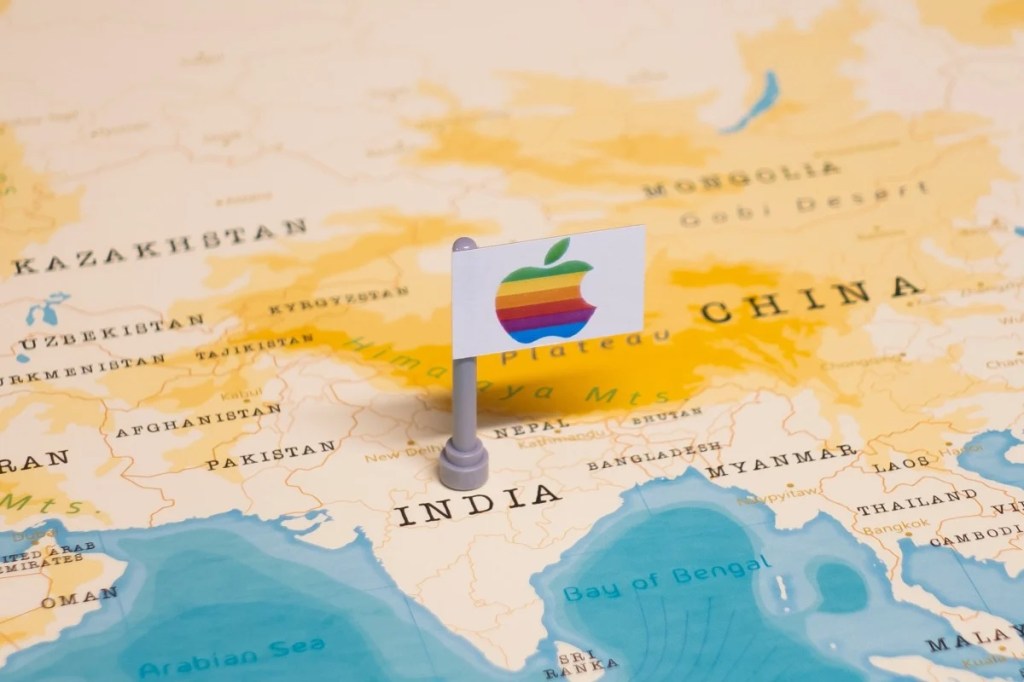
In recent years, Apple has diversified its manufacturing footprint beyond China into markets like India, strengthening resilience against geopolitical and operational risks. Coupled with synchronized global product launches, Apple’s supply chain operates with near-clockwork precision, making it a central pillar of Apple’s enduring edge.
Execution, for Apple, is not support. It is strategy.
Market Positioning: Engineering Desire
Apple has mastered the art of positioning itself not merely as a technology or consumer electronics company, but as a premium brand that inspires aspiration. Rather than competing on price, Apple created a category where higher pricing signals value, quality, and status.

This strategy extends beyond marketing. Apple leverages human psychology and consumer behavior, turning product ownership into a statement of identity. Simplicity is luxury, design signals sophistication, and price reflects exclusivity. Apple Stores are not shops. They are brand embassies, with curated experiences, the Genius Bar, and minimalist displays that reinforce aspirational positioning before a customer spends a single rupee.
Apple’s pricing strategy is defined by consistency and control. While the rest of the retail world chases Black Friday discounts and seasonal sales, Apple holds its price. Older models are repositioned at lower price points deliberately, creating a structured pricing ladder that protects brand equity and ensures the premium perception never erodes.
What makes this even more remarkable is Apple’s success in developing markets like India. With an average monthly per capita income of approximately $225, an iPhone priced at $999 represents nearly four to five months of average earnings. Yet Apple remains one of the fastest growing premium smartphone brands in the country. This is not driven by affordability. It is driven by aspiration. Consumers are not just buying a device. They are buying into a brand, a lifestyle, and a perception of premium quality.
Apple does not compete on price. It competes on perception. And wins.
Conclusion
Apple Inc.’s 50-year journey is not just a story of innovation. It is a masterclass in how great companies are built. While many organizations chase growth through expansion and diversification, Apple took a different path: focus, integration, and execution.
In an industry defined by rapid change, Apple’s strategy remains remarkably consistent. It does not chase trends. It defines them. It does not compete on price. It commands a premium. It does not simply sell products. It builds an ecosystem, an identity, and an experience.
That is what transforms a company into an institution.
“People think focus means saying yes to the thing you’ve got to focus on. But that’s not what it means at all. It means saying no to the hundred other good ideas that there are. You have to pick carefully. I’m actually as proud of the things we haven’t done as the things I have done. Innovation is saying no to 1,000 things.”
– Steve Jobs
Vedant Kale is an independent strategist, writer, and founder of Vedant Insights. He writes at the intersection of geopolitics, economics, and technology.
Follow on LinkedIn | Visit csuitemodels.com | Subscribe to Vedant Insights
 VEDANT INSIGHTS